How many days have you lived the same life?
The mountain of monotony piles on; you ease into routines of wake up, eat, work, sleep, repeat. Money piles up slowly. You feel more secure, more in place. The snow doesn’t shift underneath your feet. Nothing shifts at all. In fact, each step you take is on top of one you’ve already taken before. It’s firm and condensed beneath your feet, its outline easily traceable: a path well traversed, no fear lost.
What wakes you up? When do you begin to step out of line, to look for the other options, the side routes leading into a different field?
The human condition has had its time with you, at times convincing you that there is nothing but routine, nothing more than eating and sleeping and money and the conditions that surround us. A strange fear grows out of security. Follow the same path for long enough and anything outside of it begins to look dangerous. Routine can convince you that the conditions surrounding you are fixed, that this is simply the way things are. What a lie that is.
What if you could change the way you perceive the world? See the conditions for what they are: fluid, variable, something to read and respond to. You can scout ahead. You can change direction. You no longer believe that everything is stuck in its place, immobile and unchanging. Step off the path, and you sink softly into the fine powder, a cloud that gives way with almost no resistance. The sound is almost addictive: that starchy crunch as you traverse further into an untouched blanket of snow.
Suddenly, there is no line to follow. You’ll carve it yourself.
We climb into the unknown; not because the top promises us anything, but because moving through it changes the way we see what lies below. Here, 15,000 feet above Santiago, I revel in humanity's fragility: Small bodies moving through this grandeur, leaving tracks that the next snowfall will erase. Roads scratched into valleys, entire routines reduced to specks below.
It’s from the valley that we look up and imagine greatness somewhere above us, and from the peak that we realize that everything that seemed so large becomes small.
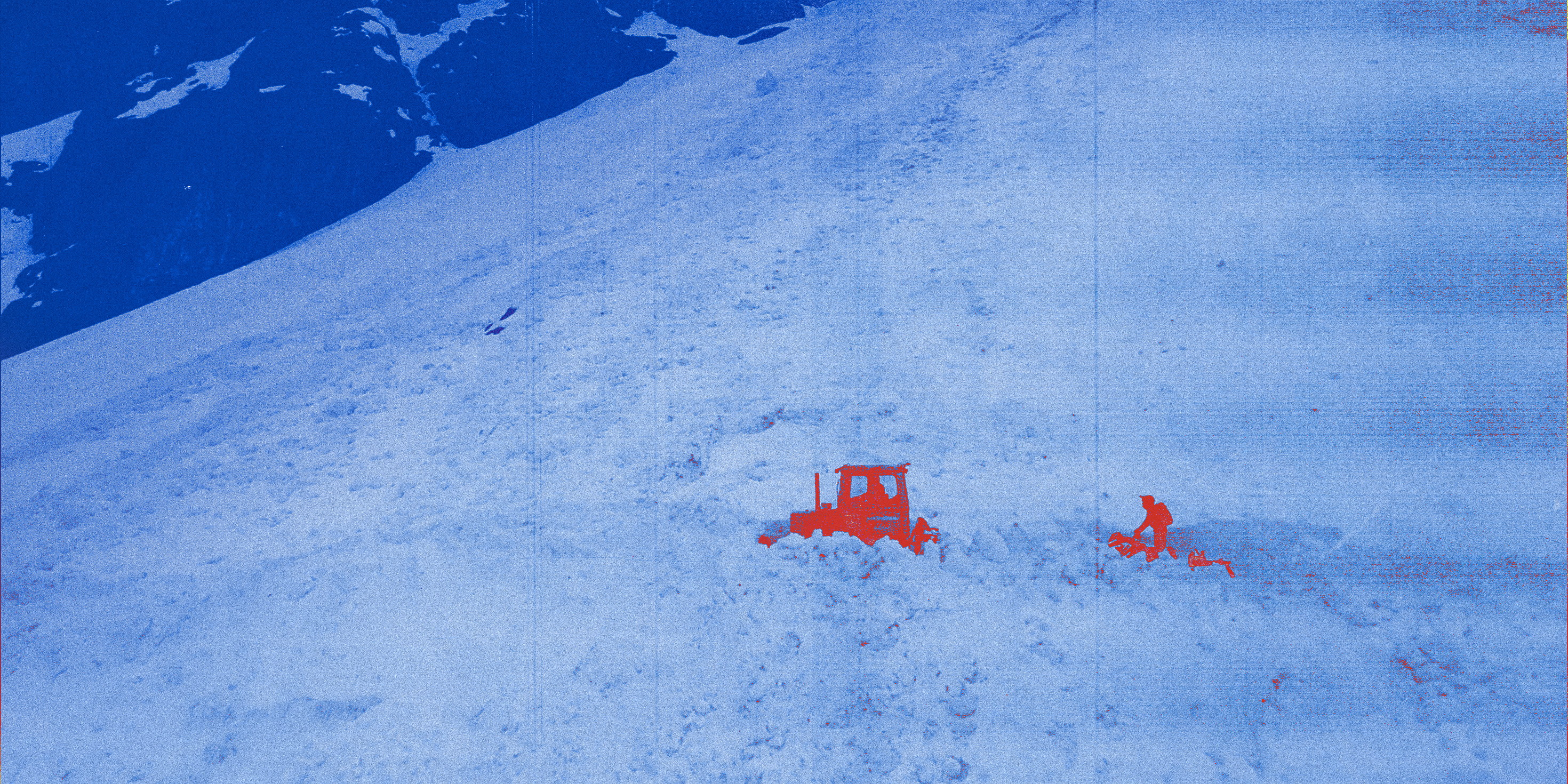
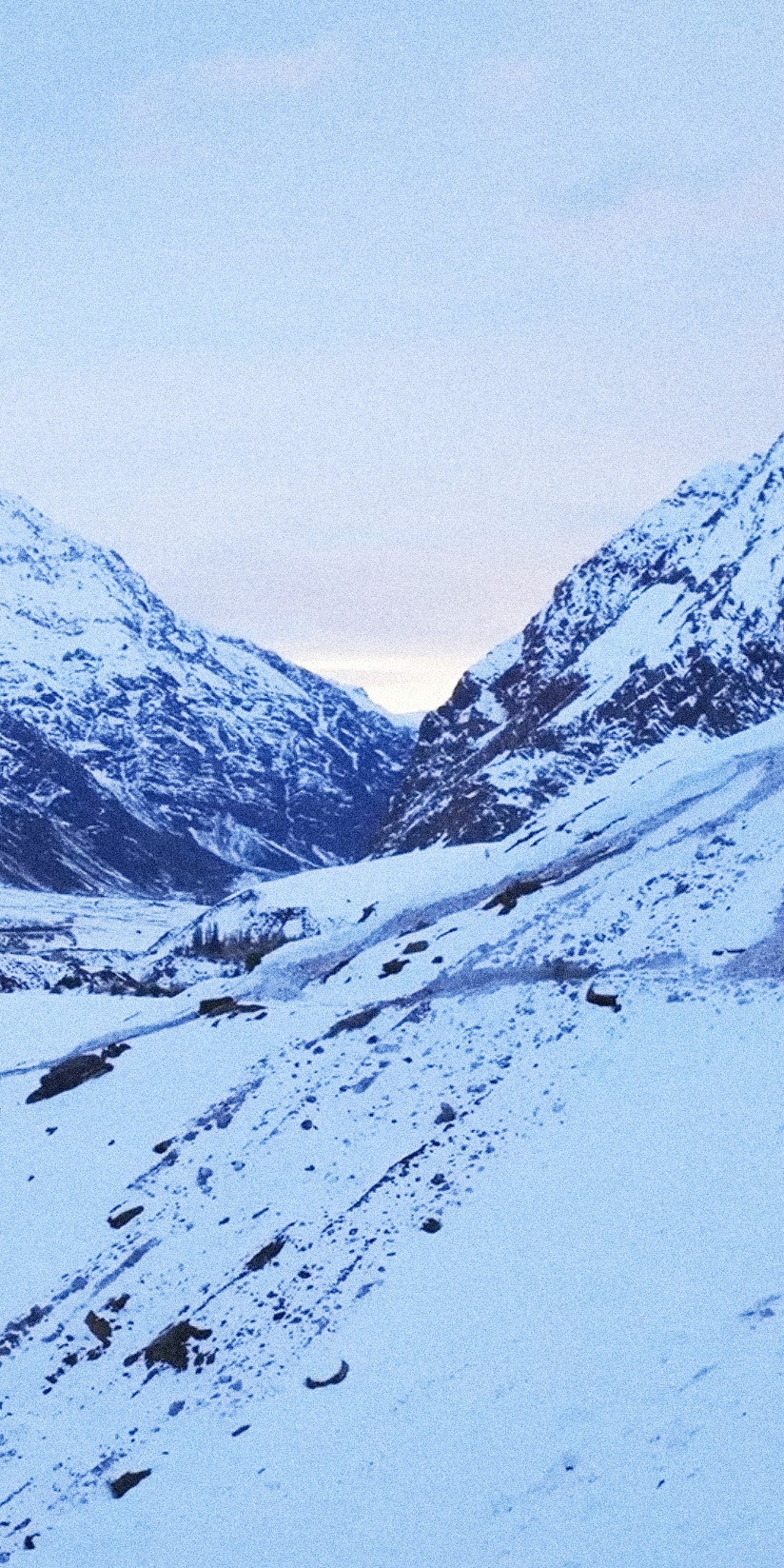
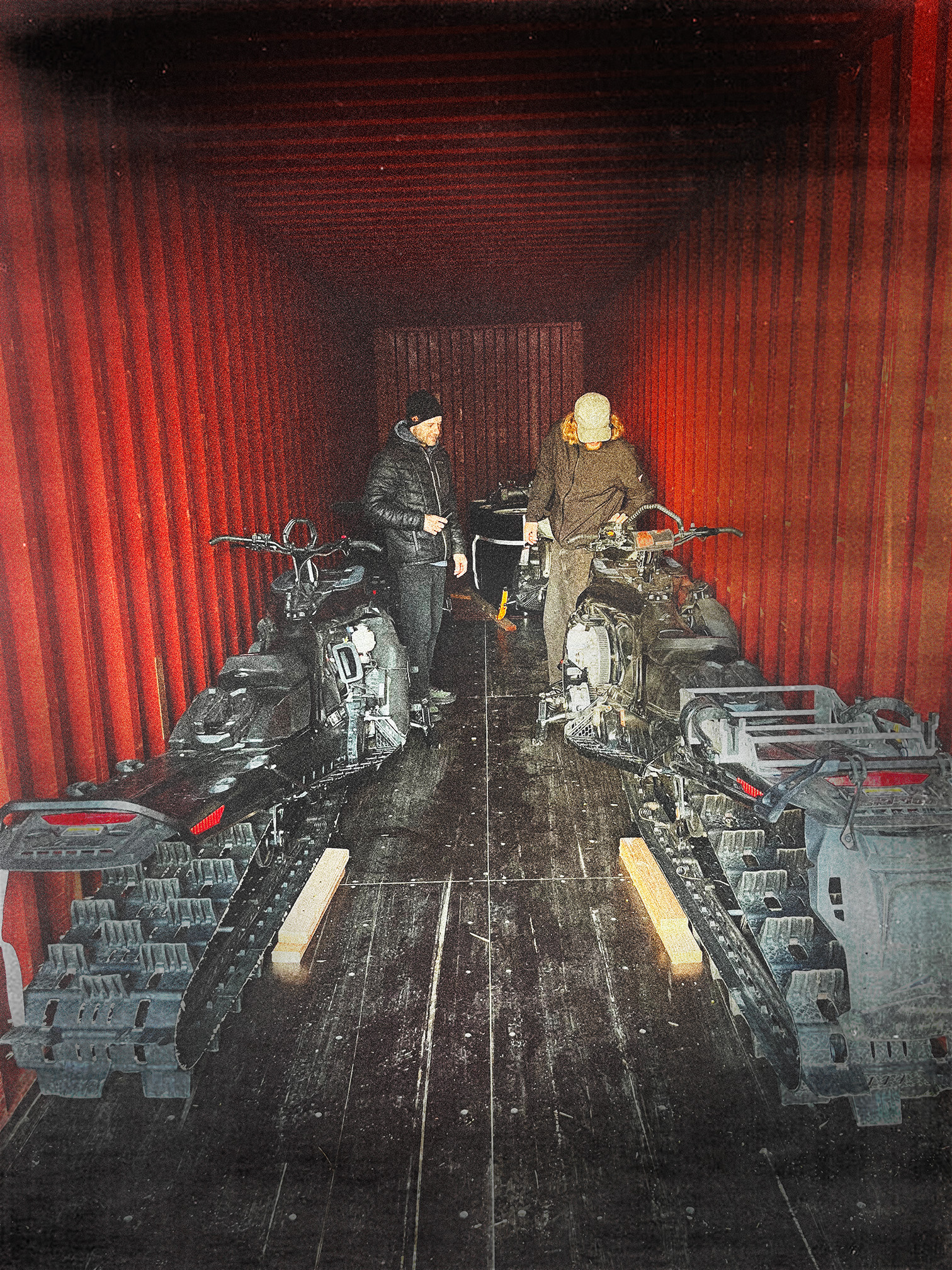
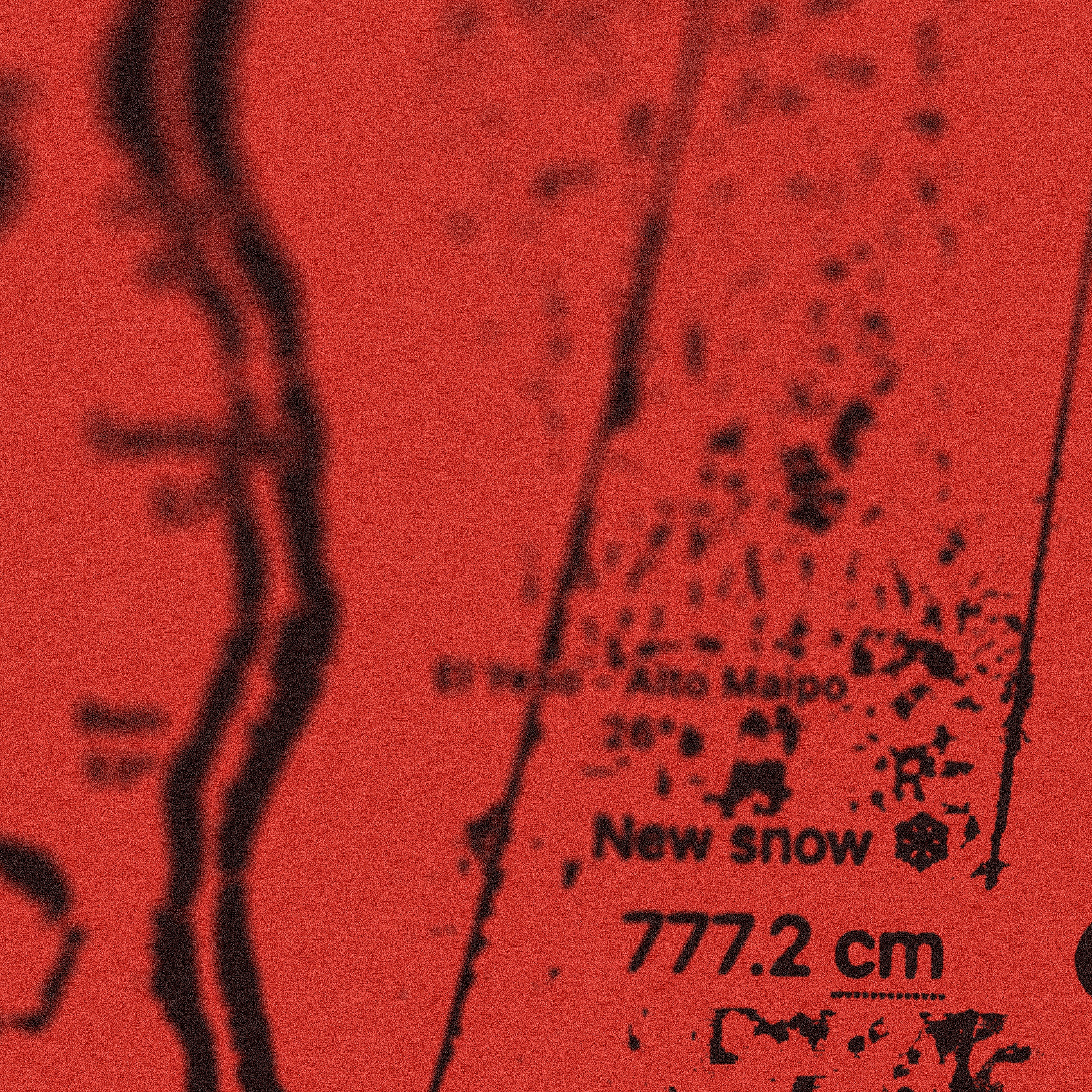
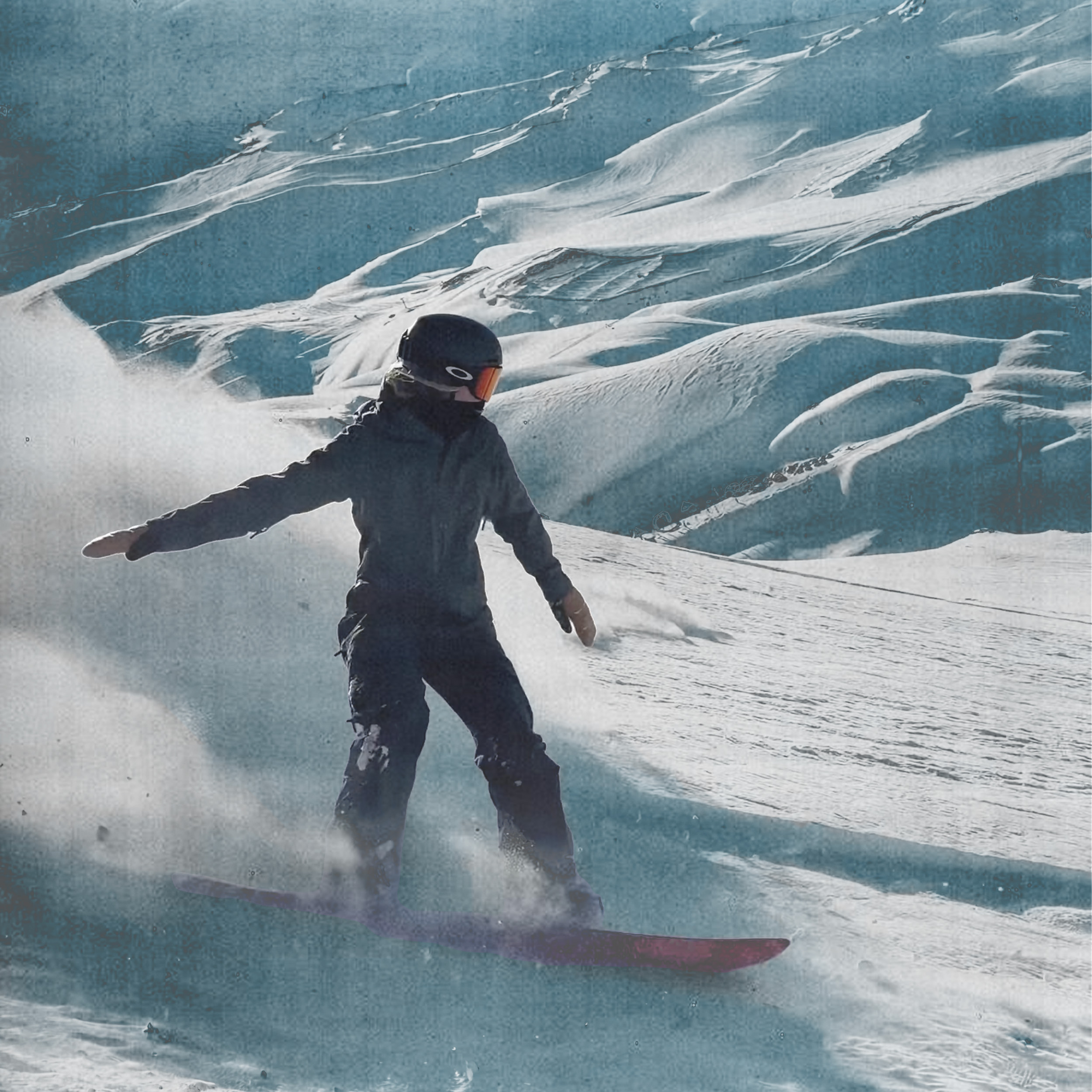
The conditions in Chile were historic. El Niño decimated the country, triggering a chain of powerful and unusual storms that left Santiago hit by back-to-back heavy rain, wind, and snow. The rain just kept coming, with mudslides and rivers appearing where there shouldn’t be rivers in the south.
Anto and I took the helicopter to scout the region and saw the sheer volume of snow. Over the course of two to three weeks, nearly 20 feet had fallen. We had finally gotten clearance to hit the slopes, but as temperatures warmed, heavy, wet snow piled itself on top of all that fresh accumulation.
Too heavy to hold onto, the mountains were ready to shed it.
And shed it they did. On our first day in the valley, in place of a road lay 10-20 feet of debris. A scab in the mountain above; entire avalanche paths had released down to bare bone rock, carrying weeks of snow into the valley below.
It was jaw-dropping to see what we were dealing with. I’ve spent most of my life in the mountains. Time and time again, I’d seen something on this scale from a helicopter, but standing before it was entirely new and exhilarating. Just knowing the mountains are capable of holding that kind of power. Wild and raw and able to make huge sections of this planet nearly inaccessible in a second.
That afternoon, we thought the valley might be finished for us. The road was buried, and continuing further in seemed impossible, or at least something that would take days to figure out.
Good thing gringo don’t know.
Our king of the valley, Cristián Wehrhahn of Dos Tiempos, was taking care of us. By the next morning, he’d cleared it out entirely. Cristián runs a snowmobile operation tucked into this corner of the Andes. He maintains a road continually terrorized by avalanches so riders can reach terrain that would otherwise be nearly impossible to access. When the mountains attack, Cristián fights back, donning his bulldozer – sometimes alone at 4 am – and clears out the one road that leads to his valley of the Andes.
There’s something Wild West about this whole operation. You’re never quite sure how things will change from moment to moment. The Andes Anomaly is at play. Whatever conditions you think are coming, guess again. Then take that guess and throw it out the window. One night, the snow is mashed potatoes. Then a cold snap rolls through, another foot falls, and suddenly everything bonds like nothin’.
See the avalanche — and how we finally made it to our first runs in Cajón del Maipo — right here.
Nothing comes easy out here. With Brandon finally reunited with us here in Cajón del Maipo, we were ready to have some fun. We went out almost on a whim, linking up with the local crew to see what we could find. The sun paid us a visit, and a feature we had scouted a few days earlier was suddenly ridable. Sometimes after all the planning, the weeks of storms, the logistics, and waiting for that right moment, it feels almost too easy: the light changes, the snow looks good, and we’re rolling up for a good day.
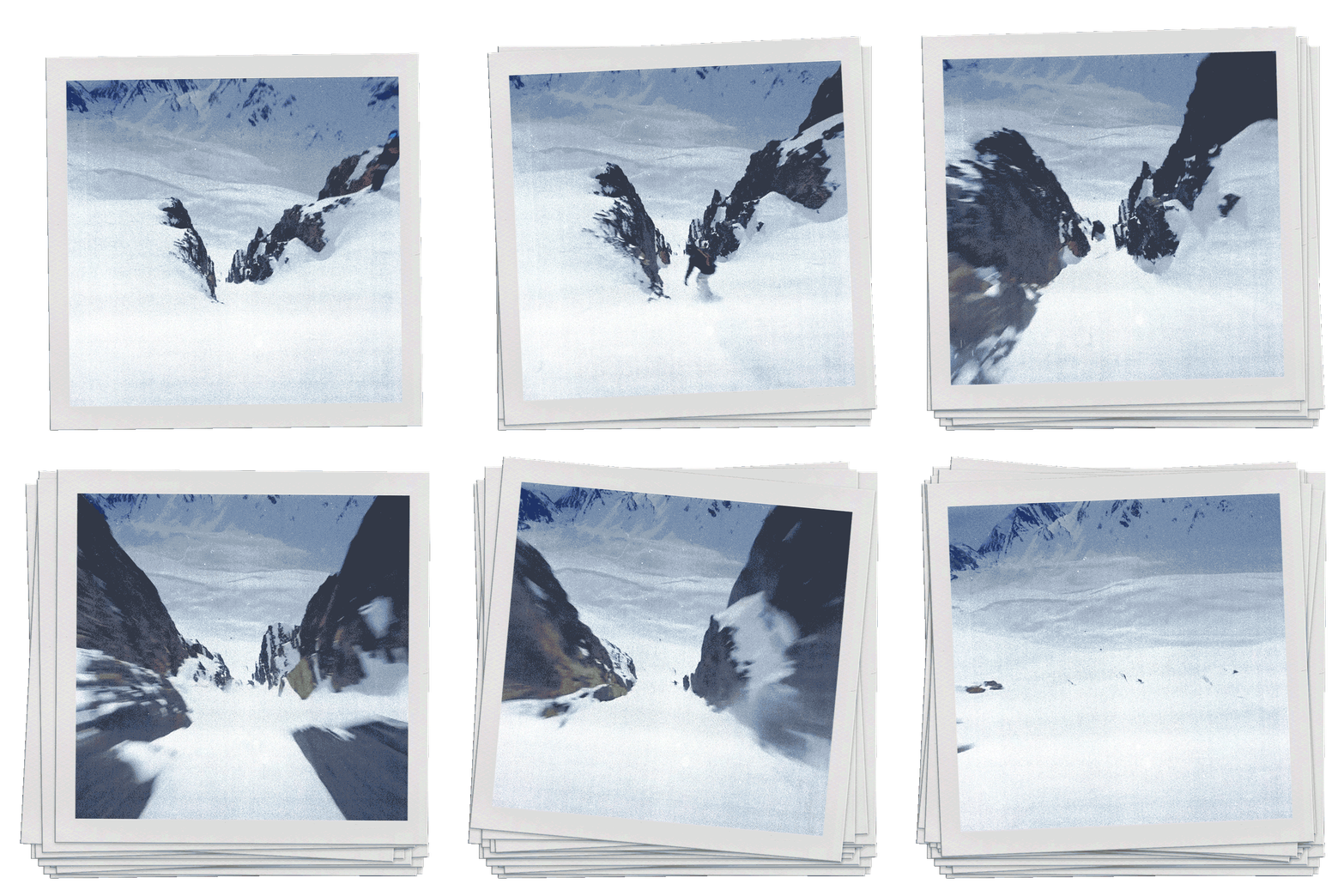
By the time Brandon and I reached the couloir, what had seemed mellow from below had changed character completely. Exposed rock on either side, a gnarly entrance with little room for error. Not to mention, I didn’t even have a helmet.
That morning we’d already started strong, with Brandon leaving his boot liners beside the fireplace long enough to shrink them nearly two sizes. With both the liners and this feature, he shrugged it off. No worries to be had in the face of obstacles. Hey, sometimes the most useful thing you can bring into a sketchy situation is a little calm.
The adrenaline started to kick in.
Then Brandon dropped.
He ollied into the corridor, picking up a ton of speed right from the start. I chicken-footed the entrance, and for a second I thought I'd blown the shot. From there, I was playing reactionary; Brandon was flying, and there was no time to think- just keep him in frame while rocks flashed past on either side of us.
“Holy shit, we are going way too fast.”
Flying through at nearly 50 miles an hour, the wind whipping up at us between walls of rock.
And then it was over.
We laughed in disbelief that it had happened at all, and that somehow we were both good.
That’s the payoff. You haul snowmobiles across the world, wait out storms, dig through the bad conditions, fry a pair of boot liners, and then the sun comes out.
Six seconds later, you have the shot.
Meet Demetri Zervos, better known as “The Frogman.” Demetri is our man in the van at GimbalGod, the eye behind the YouTube content and the one usually somewhere nearby with a camera in hand, catching everything the rest of us are too caught up in living to notice.
While Spenny and the crew have been braving the storms around Santiago, Demetri has been traversing Chile towards the alien landscape of San Pedro de Atacama— Mars on Earth.
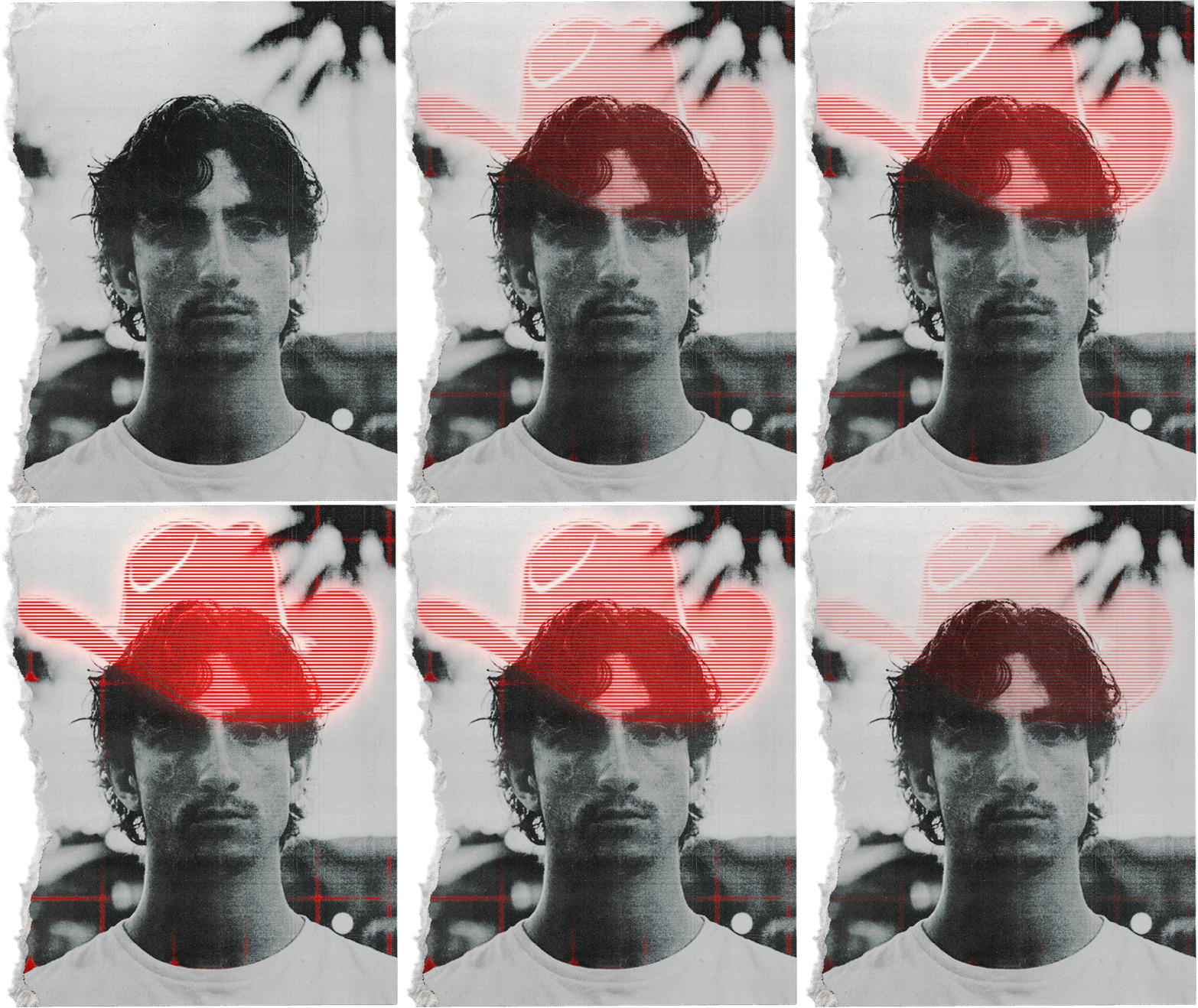
AGE
25
known aliases
The Frogman
Birthplace
Michigan, USA
San Pedro de Atacama is a world stripped down to its rawest elements. Here, in the high plateaus of the mountains, lie arid deserts and salt flats that stretch towards the end of the earth. Volcanoes, geysers, and hot springs seem to burst from nothing, offering the sacred gift of water in such a scorched oasis. Some parts of these deserts haven’t seen rain in centuries. Chile is a landscape of extremes, and while Santiago flooded itself, sticking Spenny and the crew in mudslides, here there was hardly a cloud to be seen in the sky.
But life finds a way; it still takes root even in the most arid and brutal of conditions. Ancient routes cut through the enormous dunes and strange rock formations. The Atacameño and Lickanantay people learned to build lives in a place where every drop of water could never be taken for granted.
And as the sun falls, the true magic of San Pedro de Atacama is revealed.
With almost no moisture in the air, the night sky opens itself entirely. Stars crowd into spaces you never realized were empty. Bursts of color appear where, back home, the night sky washed out entirely. With its combination of dry skies, high elevation, and very little surrounding light pollution, San Pedro has established itself as one of the best places to look into the great unknown above us. Some of the world’s most powerful observatories sit high in these mountains, looking farther outward and further back in time.
We have always looked to the sky for direction, for time, for guidance in harvesting and our relationships with one another. In Andean tradition, meaning lives in the darkness between the stars; black shapes cut into the Milky Way become animals of guidance. The great black llama watches over the desert, her eyes marked by two of the brightest stars in the southern sky: Alpha and Beta Centauri.
How do you capture such greatness?
For hours at a time, the camera stayed fixed while the world moved around it. There’s something strange about timelapses: you set the camera down, step away, and time itself becomes visible. Clouds pour over the mountains, light bursts out of the sky, and the stars begin to turn.
For a moment, you can watch the Earth itself move through the great beyond.
Sunset into night. Night into morning.
Back in Santiago, the Mission 1 Pro ILS watched the clouds roll through the Andes overnight. With just one external battery pack, it kept running through the cold until morning, sitting quietly behind the house while the sky transformed above it. Usually, keeping a camera alive through an entire night means returning every few hours to change batteries. Here, one external pack was enough to let the camera stay exactly where it was and simply watch the dawn unfold into pure color.
You can’t come out to the desert and not ride a horse.
Some places just beckon to be explored by horseback, and the Atacama Desert’s surreal landscape feels made for it.
Before riding out, Demetri made laps through town looking for the perfect Chilean poncho and cowboy hat, combing through small stands and storefronts until he found a handwoven alpaca-wool poncho that would soon pass the only test that really mattered: at the ranch, the man running the place tugged at it, looked it over, and said, “elegiste bueno.”
Approved. Now to ride.
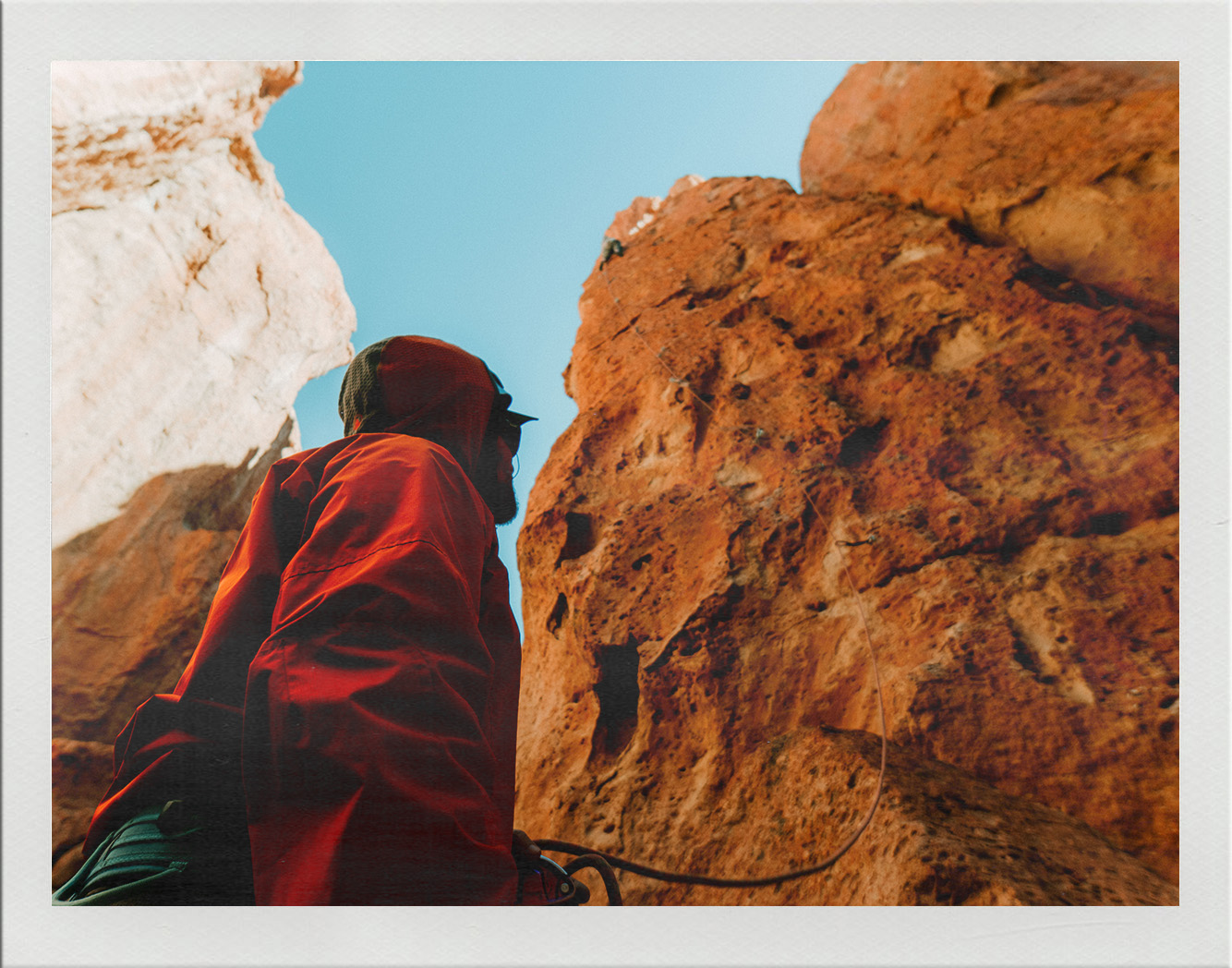
They headed out for a four-hour loop with Leo–an Argentinian cowboy and musician who had been touring and playing trumpet throughout South America, eventually landing in San Pedro. He had been there for two years, and somewhere along the way, started working with horses. Our route wound through gorges, slot canyons, tunnels, and caves low enough that you had to duck beneath the rock.
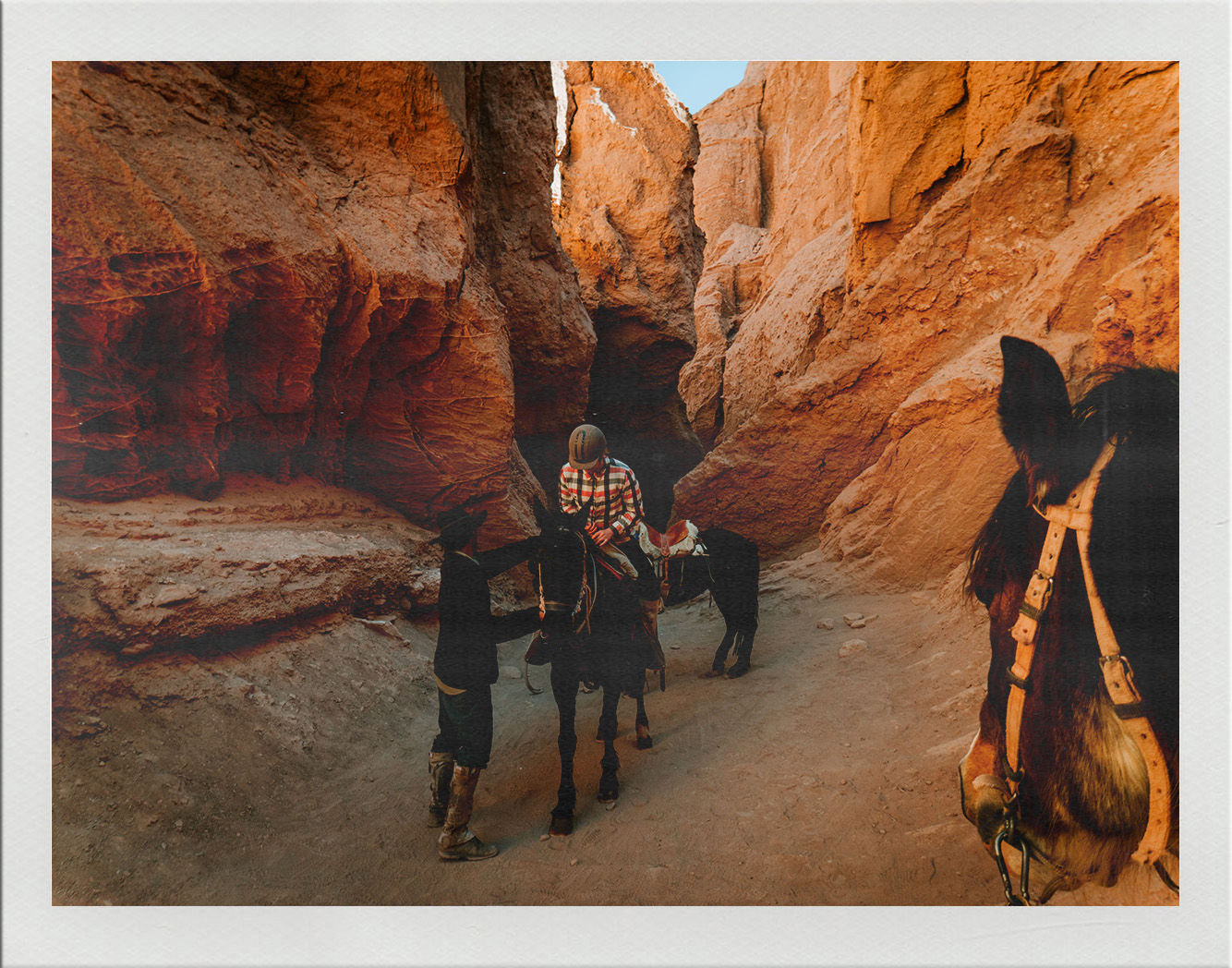
With one hand on the horse's reins, the other held the GoPro ILS. A Portkeys monitor sits on top of the smallrig handle, letting me get a better view of the stream while galloping at full speed.
This setup that with any other camera, would break my shoulder with its weight.
Finally, the terrain opened up, and we were ready to run. Whenever Leo took off at a sprint, the hat came off first. I’m able to switch between presets programmed before we had set off, bouncing from 24 frames per second to 60, to 240, and even 480, allowing the switch to slow motion with just a click of a button.
Somewhere between the canyons and the open stretches, Leo mentioned he’d be playing trumpet later that night at a tavern in town.
In San Pedro, everyone seemed to contain another life.
"The first question you will ask and which I must try to answer is this, ‘What is the use of climbing Mount Everest?’ and my answer at once must be, ‘It is no use’. There is not the slightest prospect of any gain whatsoever.
Oh, we may learn a little about the behaviour of the human body at high altitudes, and possibly medical men may turn our observation to some account for the purposes of aviation. But otherwise nothing will come of it.
We shall not bring back a single bit of gold or silver, not a gem, nor any coal or iron. We shall not find a single foot of earth that can be planted with crops to raise food.
It’s no use.
So, if you cannot understand that there is something in man which responds to the challenge of this mountain and goes out to meet it, that the struggle is the struggle of life itself upward and forever upward, then you won’t see why we go.
What we get from this adventure is just sheer joy. And joy is, after all, the end of life.
We do not live to eat and make money. We eat and make money to be able to live.
That is what life means and what life is for."
- George Mallory [The First man to climb Everest]